The Goal Was Never Just Music
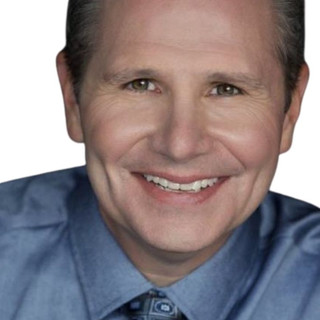
By Dr. Bob Lawrence, Director of The Dallas School of Music
When a student begins music lessons, the goals often seem straightforward.
Learn to play an instrument.
Read music.
Develop technique.
Learn songs and repertoire.
Prepare for performances.
Become a better musician.
These are worthy goals, and they are an important part of what we do as music educators.
But they are not the whole story.
After more than three decades of teaching, I have come to believe that some of the most meaningful outcomes of music education are not found exclusively in the music students eventually perform.
They are found in the people students gradually become through the process of learning.
Music asks students to listen carefully.
To work patiently.
To confront difficulty.
To make mistakes and correct them.
To develop discipline.
To become increasingly independent.
To express ideas.
To accept that meaningful progress requires time.
Those lessons certainly make better musicians.
But they can also develop qualities that matter far beyond the lesson room.
That is why, at The Dallas School of Music, the goal was never just music.
Music Gives Students Something Worth Working Toward
Learning an instrument requires students to experience something increasingly rare: progress that cannot be rushed.
There are no shortcuts around certain parts of musical development.
Fingers need time to develop coordination.
Ears need time to recognize musical relationships.
Reading becomes fluent through repeated exposure.
Technique develops through careful repetition.
Understanding grows as students encounter ideas again and again in different contexts.
This process teaches students an important lesson.
Wanting an outcome and developing the ability to achieve it are not the same thing.
As we explored in Why Growth Requires Challenge, meaningful development occurs when students repeatedly engage with something they cannot yet do.
The difficulty is not evidence that learning has failed.
Very often, it is evidence that learning has begun.
Music gives students a safe and meaningful place to experience that process repeatedly.
Students Learn How to Respond When Things Go Wrong
Every student makes mistakes.
Notes are missed.
Rhythms fall apart.
Memory fails.
Performances do not always go exactly as planned.
A student may spend an entire week practicing something incorrectly and arrive at a lesson only to discover that it needs to be relearned.
These moments can certainly be frustrating.
But they are also educational.
In Why Mistakes in Learning Music Are Essential, we explored an important distinction:
Making a mistake alone does not create growth.
Correction does.
Students learn to stop, identify what happened, understand the problem, make an adjustment, and try again.
Over time, the emotional response to mistakes can change.
Instead of seeing every error as failure, students begin seeing problems as something that can be examined and addressed.
That is an important musical skill.
It is also an important way of approaching life.
Discipline Gradually Becomes Independence
At the beginning of study, much of the structure comes from the teacher.
The teacher chooses appropriate material.
Establishes priorities.
Corrects problems.
Suggests practice strategies.
And helps students understand what deserves their attention.
During In-Person Music Lessons, that guidance is essential.
But good teaching should gradually transfer responsibility.
Students begin recognizing problems before the teacher identifies them.
They learn how to organize practice.
They begin making interpretive decisions.
They arrive with questions of their own.
Eventually, they become increasingly capable of directing portions of their own learning.
This is why How Students Become Independent Learners has been such an important theme in our educational philosophy.
Discipline is not the final destination.
As we discussed in Why Discipline Creates Freedom in Music Education, structure gradually gives students the tools to function with greater independence.
The teacher provides direction.
The student develops ownership.
Music Teaches Students to Listen
Learning music also asks students to develop a quality that extends far beyond musical performance:
Attention.
Students learn to hear differences that once escaped them.
They notice balance.
Timing.
Tone.
Articulation.
Phrasing.
Dynamics.
They learn that listening is not simply waiting for sound to reach their ears.
It requires active attention.
Our discussion of Why Listening in Music Education Is Essential explored how this ability eventually allows students to evaluate their own playing rather than depending exclusively upon someone else.
That development matters musically.
But the underlying habit matters too.
Pay attention.
Notice what is happening.
Listen before responding.
Recognize the difference between what you intended and what actually occurred.
Music gives students countless opportunities to practice that kind of attention.
Accomplishment Changes What Students Believe About Themselves
Last week, we explored how sustained progress can eventually contribute to musical identity.
Students begin by learning what they cannot yet do.
Then, through work, they begin doing it.
A first piece.
A first recital.
A difficult passage mastered.
A rhythm finally understood.
A new level of repertoire reached.
A musical decision made independently.
None of these accomplishments alone defines the student.
But accumulated over time, they create evidence.
I can learn difficult things.
I can improve.
I can recover from mistakes.
I can understand something that once confused me.
I can do more today than I could before.
This is why confidence developed through education is different from reassurance.
We can tell students they are capable.
But there is extraordinary power in allowing them to discover that capability through experience.
The Purpose of Music Education Is Larger Than Music
None of this diminishes the importance of music itself.
The purpose of music education is not to make music less important, but to recognize everything that can develop through the serious study of it.
We teach music seriously because it deserves to be taught seriously.
Technique matters.
Musical literacy matters.
Repertoire matters.
Artistry matters.
Standards matter.
Quality instruction matters.
But music education becomes particularly meaningful when those things serve the development of the person learning them.
A perfectly performed recital is wonderful.
But if the educational process develops patience, discipline, confidence, curiosity, independence, judgment, and a lifelong relationship with music, something even more enduring has taken place.
This principle sits at the heart of our Music Lessons at The Dallas School of Music.
Families and adult students interested in our approach can explore our Enrollment Plans, and our Questions and Answers page provides additional information about lessons, scheduling, expectations, and enrollment.
Closing
At The Dallas School of Music, we want students to become better musicians.
We want them to read well.
Play well.
Listen carefully.
Understand deeply.
Create thoughtfully.
And continue developing musically for as long as music remains part of their lives.
But after decades spent teaching students, I am increasingly convinced that the greatest measure of music education is not simply what happens to the music.
It is what happens to the student.
The discipline.
The confidence.
The independence.
The curiosity.
The ability to confront something difficult and continue working.
The willingness to listen.
The satisfaction of discovering that patient effort can produce something that once seemed impossible.
These are among the reasons we continue exploring the philosophy behind music education each week through the DSM Minute Podcast.
We teach music with seriousness, purpose, and high standards.
But we never forget something more important:
The people we serve are much more important and precious than the music we teach.
And that is why the goal was never just music.

Dr. Bob Lawrence is the Director of The Dallas School of Music and an internationally recognized music educator. He holds advanced degrees in music and has spent decades teaching students of all ages, from beginners to advanced musicians.
Dr. Lawrence is also the founder of Jazz Piano Skills, a global jazz education platform, podcast, and membership community serving musicians worldwide. His work focuses on structured learning, conceptual clarity, and long-term musical development.


Comments